
The Clear Digital Method is Clear Digital’s six-phase process for planning, designing, building, and supporting B2B websites: Discovery, Strategy, Design, Build, Launch, and Optimize.
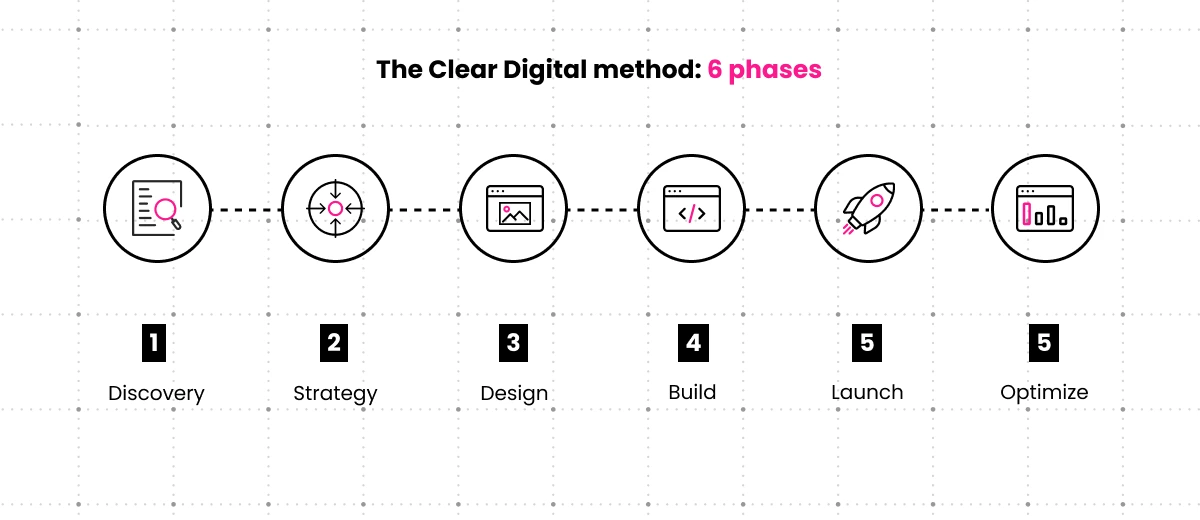
Every B2B agency claims a proven process. Ask most of them to walk you through it, phase by phase, with real deliverables and real timelines, and the answer gets vague fast.
Here’s ours, named and numbered: the Clear Digital Method. Six phases, from the first workshop to the day your site goes live. This piece breaks down what happens at each stage, what you get, and how we keep a project on track when scope, timelines, or priorities shift midstream.
The 6 phases
| Phase | What happens | What you get |
|---|---|---|
| 01. Discovery | Workshops, research, and a Velocity Workshop that surfaces what’s known and unknown | Findings documentation, a project roadmap |
| 02. Strategy | Sitemap, tech strategy, and content strategy get defined and approved | Signed-off sitemap, CMS/integration plan, content strategy |
| 03. Design | Wireframes, then visual design, through review rounds | Approved wireframes and page designs |
| 04. Build | Development on staging, with template walkthroughs as work finishes | A working site you can watch take shape |
| 05. Launch | Pre-launch QA, migration, and go-live | A signed-off launch checklist, a live site |
| 06. Optimize | Ongoing support and performance work | Ongoing support, performance reporting, and QBRs for retainer clients |
3 ways an engagement starts
Not every project starts in the same place. It depends on how clearly the problem is already defined.
If you already know exactly what you need, we scope directly from the proposal. If there’s real ambiguity about goals, audience, or scope, Discovery becomes the first paid phase. And if you’re not ready to commit to a full rebuild yet, we run a standalone diagnostic first, so you have something concrete to decide from before signing a bigger engagement.
Phase 1: Discovery. Our Velocity Workshop puts every unknown on the table
Discovery opens with the Velocity Workshop. It puts everything on the table at once: what the team already knows about your business, what it doesn’t, and how it plans to close that gap before design work starts.
The workshop runs on two components. Context Sheets capture your business context, goals, current approach, known risks, open issues, and an honest read on how ready your organization is for the work ahead. The Roadmap lays out every phase and step required to finish the project, flags anything explicitly out of scope, and checks the plan against the signed SOW.
From there, Discovery expands into creative, content, and technology workshops, along with interviews and research as needed for your specific project. You walk away with documented findings the whole team, yours and ours, can build from.
Phase 2: Strategy. Approach, decisions, and sign-offs
Strategy is where the big calls get made before anyone opens a design file.
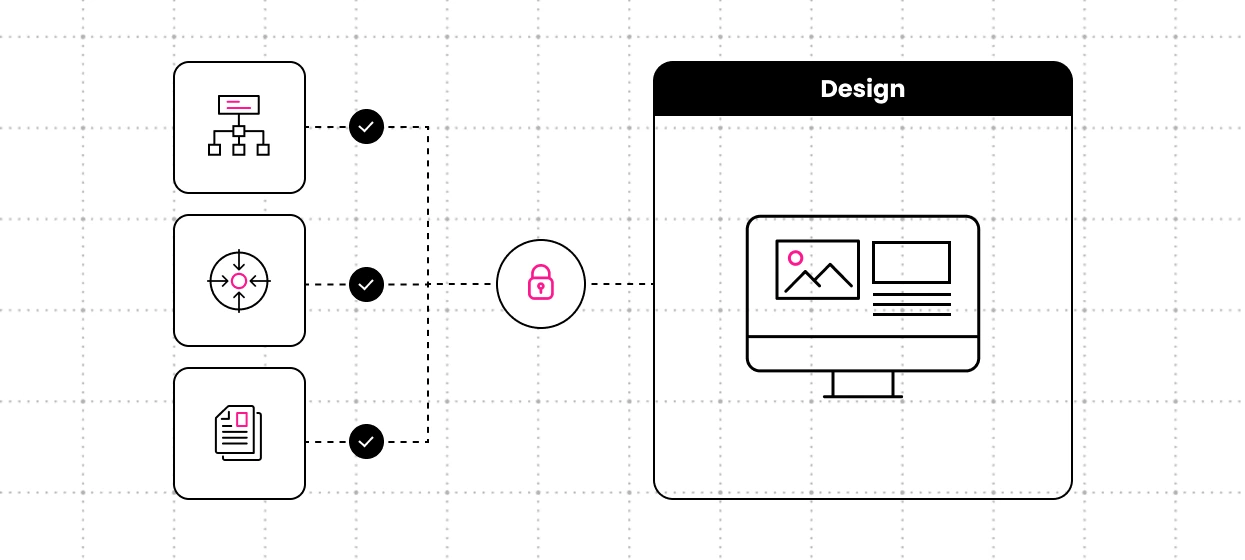
You’ll sign off on three specific things: the sitemap, the technology strategy (CMS, integrations, hosting), and the content strategy. Design doesn’t start until all three are locked. That order matters. Designing before the sitemap and content strategy are settled means redesigning later, once the real structure of the site becomes clear.
Phase 3: Design. Wireframes first, then visual directions
Design starts with wireframes covering every page type and component your site needs.
Visual direction depends on where your brand stands. If your brand guidelines are mature, we start from three homepage concepts built around them. If they need more definition, we start from three style tile directions instead, then narrow before building full page designs. Either path runs through review rounds until you sign off and the work hands to development.
Phase 4: Build. Watch your site take shape
You can watch your site take shape on staging throughout Build, from the first template to the last. As templates finish, our team walks you through them directly instead of leaving you to find changes on your own.
Build runs development, CMS integration, content entry, and quality assurance in parallel: cross-browser testing, cross-device testing, and design QA from both a creative director and a UX lead. Nothing moves to Launch without clearing that full review.
Phase 5: Launch. Checklists signed off before go-live
Before anything goes live, we run a checklist covering QA, accessibility, performance, SEO migration, and analytics setup, and you see the sign-off yourself.
After a content freeze, the site launches. What follows is a post-launch checklist, training and documentation for your team, and a defined window for catching and fixing any bugs that surface once real traffic hits the site.
Phase 6: Optimize. Ongoing support and refinement
Optimize starts after launch: the ongoing support phase, where performance data starts informing what gets adjusted next. That includes ongoing support, performance reporting against the goals set in Discovery, and a prioritized list of what to adjust next. See our support subscription plans and the Website Effectiveness Engine we use to measure it.
This is also where quarterly business reviews live, for clients on a retainer. QBRs aren’t part of the build itself. They’re a mechanism for the relationship that continues after it.
Every engagement starts with a Velocity Workshop scoped to your specific situation, not a generic pitch deck.
How Clear Digital keeps projects on track: weekly status, written change impacts, a timeline you can see anytime
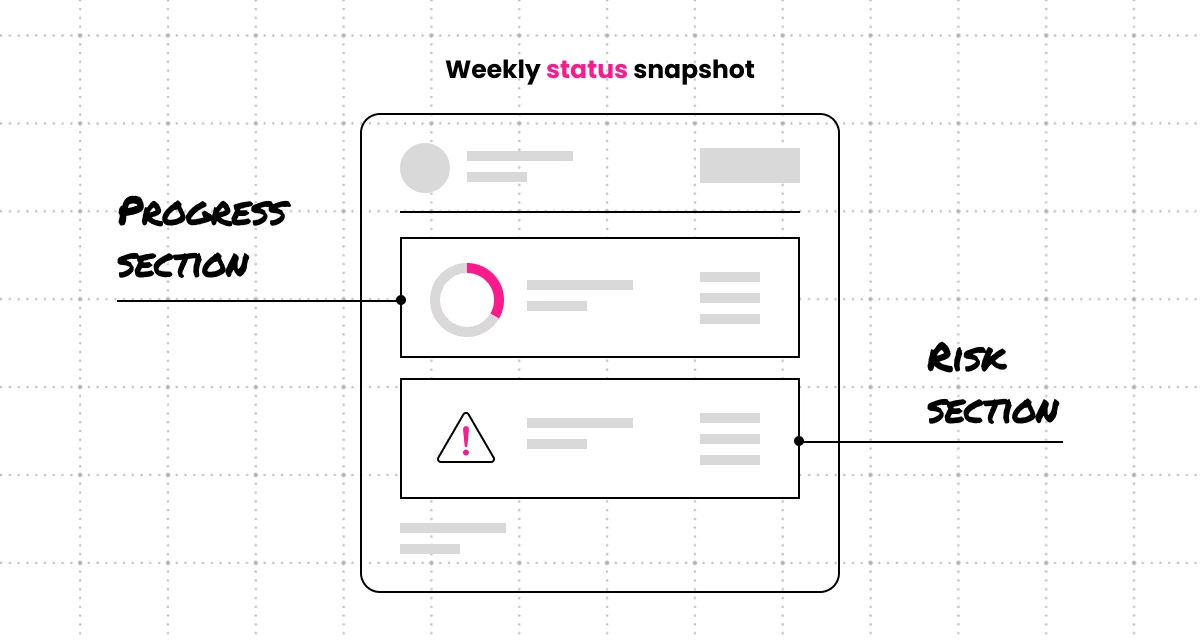
You get a weekly call with a dedicated project manager, plus written status covering progress, decisions still needed from your side, risks, and where the budget and timeline stand. You also get direct access to the project timeline and communications platform, so you’re never waiting on someone to tell you where things are.
If scope needs to change mid-project, we write up what it does to cost and timeline before doing the work, and you decide whether to move forward. If a decision on your end is still pending, it shows up on the weekly status along with what that delay does to the schedule.
What we need from you
The method runs on a few things from your side:
- Content that’s ready when Build needs it. Along with scope, content readiness is the biggest variable in the timeline.
- Decisions on time. Open decisions appear on the weekly status along with what a delay does to the schedule.
- The right people available for the Discovery workshops.
- One accountable owner for each sign-off.
What’s different: confidence you can point to
- The Velocity Workshop surfaces unknowns before any design work starts.
- Three sign-offs, sitemap, technology strategy, and content strategy, before a design file is opened.
- Written cost and timeline impact for every scope change, before the work happens.
- Direct access to the project timeline and communications platform, and staging you can check whenever you want.
- A published timeline range, not a vague estimate.
- One core pod from the first workshop through launch, principals included.
There’s also who stays on the project. A core pod, project manager, strategist, creative lead, and tech lead, stays from the first workshop through launch. Our principals stay involved the whole way. The team you meet in the pitch is the team that builds your site. No handoff to a different group once the contract is signed, and no gap between strategy and execution, because it’s the same team running both.
Enterprise vs. mid-market: same phases, different depth
The six phases don’t change based on company size. What changes is how much weight each one carries.
Larger, more regulated organizations typically need more workshops up front, formal sign-offs at more points, procurement and security reviews built into the schedule, and compliance requirements factored into both Strategy and Build. A mid-market engagement moves through the same six phases with fewer approval layers and a shorter runway between phases. The method holds. The depth adjusts to what the engagement calls for.
The method in practice: Splunk website redesign
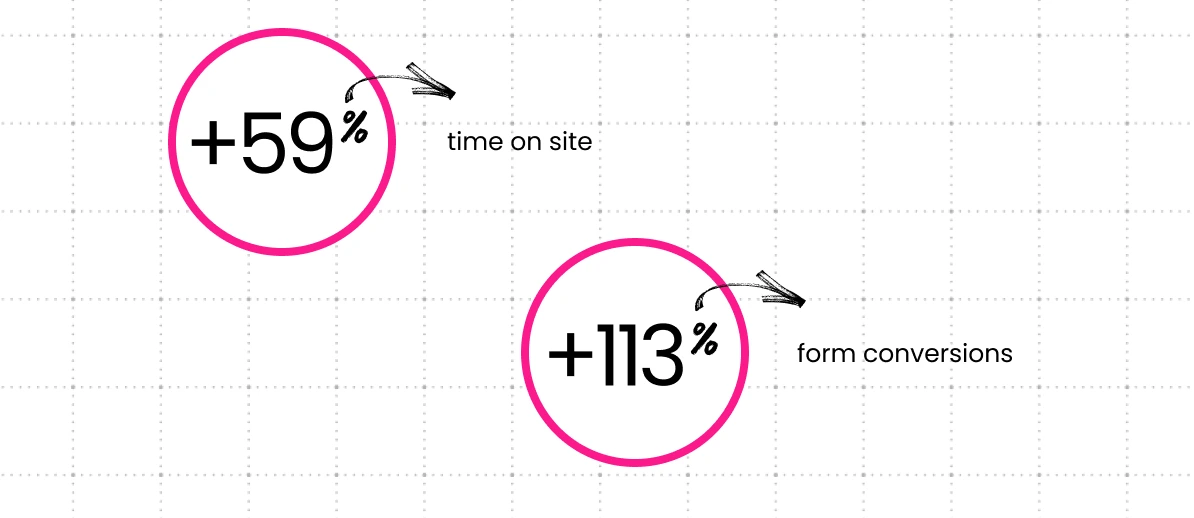
Splunk’s website redesign shows the Strategy and Design phases in practice. A major shift in how Splunk categorized its products meant a site with well over 100 pages needed a new architecture and navigation. We mapped the navigation first, built wireframes to set the narrative for each page before any visual design, then worked through the remaining site sections in sprints with review rounds on each. The result: a 59% increase in time on site and a 113% increase in form conversions after launch.
FAQs: common questions about working with Clear Digital
How long does a typical Clear Digital website project take? Most enterprise B2B projects run four to six months from Discovery through Launch. Scope and how ready your content is are the two biggest factors that move that timeline.
What’s the first thing that happens when we start working with Clear Digital? The Velocity Workshop. It’s the first substantive session of Discovery, and it sets the roadmap for everything after it.
Do we get to see the site before it launches? Yes. You have staging access throughout Build and get walked through finished templates as they’re completed.
How does Clear Digital handle mid-project scope changes? Any change gets a written cost and timeline impact assessment before the work starts. You decide whether to move forward.
Is the Clear Digital Method different for large, complex organizations? The six phases stay the same. What changes is depth: more workshops, more formal sign-offs, and compliance requirements built into Strategy and Build for larger, more regulated organizations.
What happens after launch? Optimize, the ongoing support phase. This is also where quarterly business reviews happen for retainer clients, tracking performance and deciding what to adjust next.
Curious what this looks like for your project specifically? Let’s talk.
Get our latest insights in your inbox
When a “Good Enough” Website Is Quietly Costing You Pipeline
By Clear Digital on July 14, 2026
Read more
How to Prepare Your Internal Team Before a Website Redesign Starts
By Clear Digital on June 29, 2026
Read more
How to Evaluate a B2B Web Design Agency (Before You Sign Anything)
By Steve Ohanians on May 26, 2026
Read more