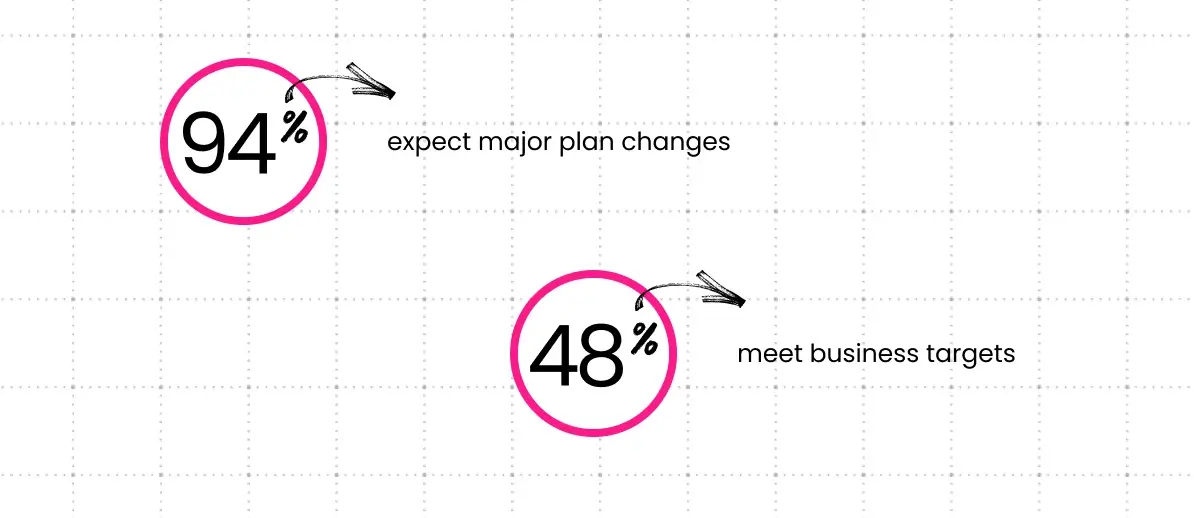
94% of CIOs expect major changes to their plans within 24 months. Yet only 48% of digital initiatives meet or exceed business targets. The opportunity is not more investment. It is better decisions.

The numbers tell a contradictory story. Ninety-four percent of technology executives expect major changes to their plans and outcomes within the next 24 months. Yet only 48% of digital initiatives actually meet or exceed their business targets. More investment, more pressure, more moving parts, and the same stubborn gap between strategy and execution persists.
That gap is the problem this playbook addresses.
2026 is not the year for another round of ambitious roadmaps that stall in procurement or get quietly shelved after the first reorganization. It is a year for decisions: what to build, what to modernize, and what to cut. This CIO playbook is structured around exactly those decisions, with frameworks for AI adoption, infrastructure investment, workforce transformation, and the legacy systems that are quietly costing more than most technology budgets acknowledge.
The State of CIO Leadership in 2026
The CIO role has changed more in the last three years than in the previous decade. Technology leaders are no longer in the background maintaining systems while business units set strategy. They are in the room where investment decisions get made, and they are expected to defend those decisions with ROI data, not roadmap slides.
The mandate has expanded in three directions simultaneously.
AI governance and ethical oversight. As organizations scale AI deployment, responsibility for infrastructure integrity, model risk, and compliance increasingly lands with the CIO. Some organizations are formalizing this through Chief Trust Officer roles. Most are absorbing it into an already stretched function.
Corporate sustainability. Technology now plays a central role in environmental performance metrics. CIOs are expected to identify efficiency gains and infrastructure changes that support sustainability targets alongside operational ones.
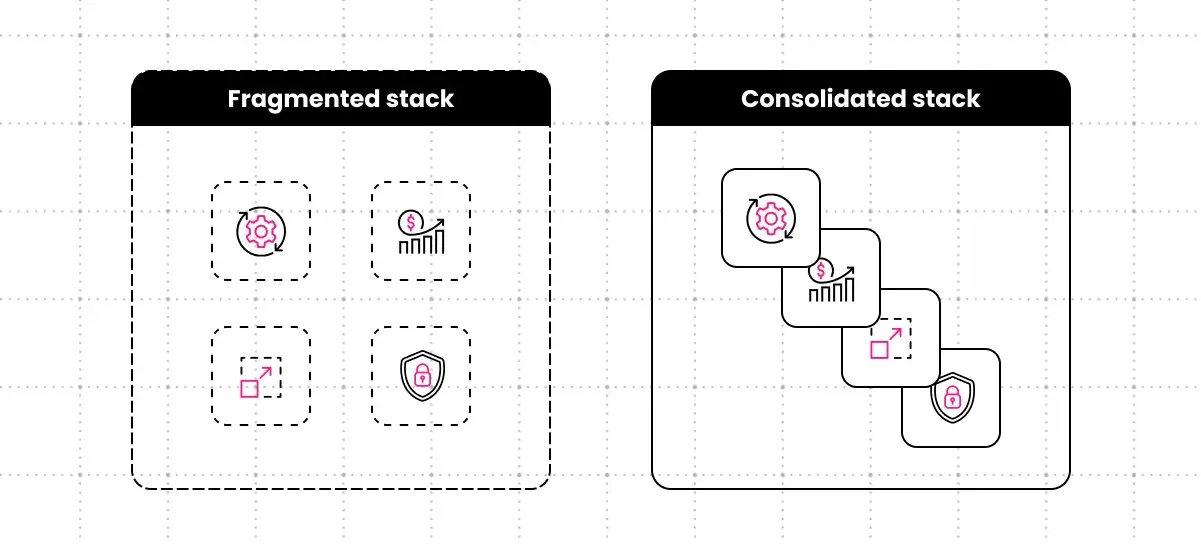
Strategic platform consolidation. Years of best-of-breed purchasing and rapid pandemic-era digital expansion left most enterprises with fragmented technology estates. Rationalizing that landscape, retiring redundant systems, and reducing vendor complexity has become as strategic as any new investment decision.
The CIOs navigating 2026 successfully are building organizational capacity to manage these responsibilities in parallel, not in sequence.
The Three Pillars of the 2026 CIO Playbook
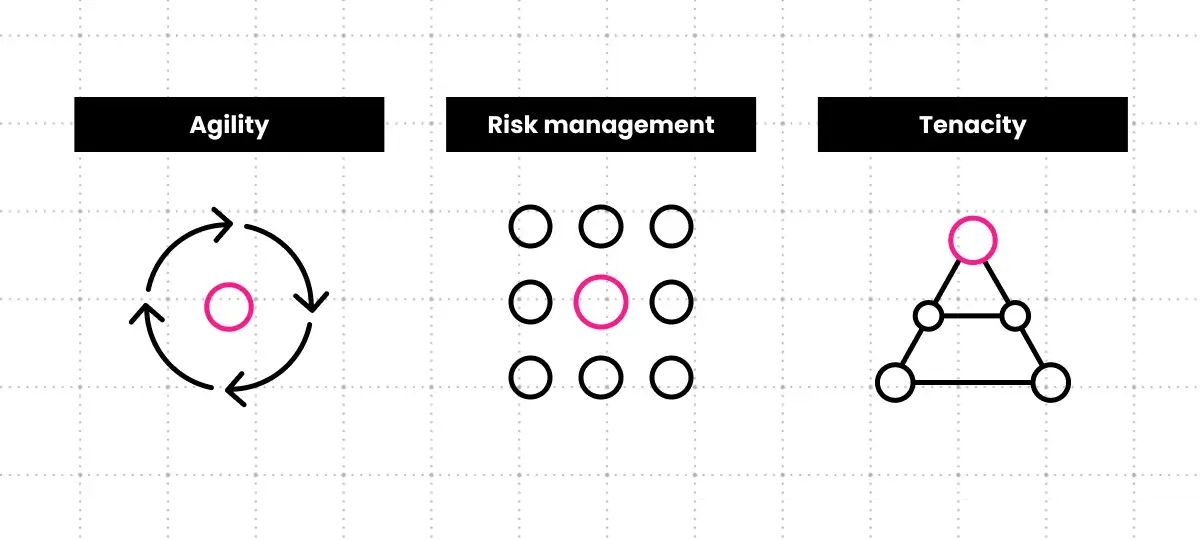
Gartner frames high-performing CIO leadership around three measurable capabilities: agility, risk management, and tenacity. These are not aspirational qualities to list in a strategy deck. They correlate directly with transformation outcomes. Every investment, sunset decision, and resource allocation in this playbook should strengthen at least one of them.
Agility is the ability to adjust plans and reallocate resources without losing momentum. Not flexibility used as an excuse to avoid commitments, but structured responsiveness to new information as it arrives.
Risk management is where the gap between high and average performers is sharpest. Only 28% of CIOs proactively manage geopolitical and vendor risks, yet those who do are 51% more likely to outperform their peers. Proactive risk management is a competitive differentiator, not a compliance checkbox.
Tenacity, in this context, means relentless outcome focus. CIOs who pursue financial outcomes from technology initiatives are 25% more likely to excel. But only 33% consistently prioritize this. Most organizations measure output, deployed systems and completed migrations, rather than outcomes like cost reduction, revenue impact, or time-to-market improvement. That distinction defines the performance gap.
Use these three pillars as the evaluation lens for every decision in the sections that follow.
Investment Priority #1: AI That Delivers Measurable ROI
AI spending is rising faster than nearly any other IT budget category, and the pressure to show returns is rising with it. An IDC study commissioned by Microsoft found organizations reporting an average 3.5x return on AI investments. But that average compresses a wide spread. The organizations at the top of that range are not the ones with the most pilots. They are the ones that moved pilots into production.
Sixty-four percent of technology executives plan to deploy agentic AI across their organizations within the next 12 to 24 months, according to Gartner’s 2026 CIO and Technology Executive Survey. That shift from experimentation to execution changes the infrastructure and governance requirements considerably.
Four areas warrant priority attention:
Agentic AI platforms. Systems that take actions, rather than just generate content, are arriving faster than most IT governance frameworks can accommodate. Infrastructure and policy should be in place before deployment scales, not after the first incident.
Domain-specific AI and edge computing. General-purpose models have limits when applied to specialized workflows. Purpose-built models trained on industry-specific data consistently outperform general models in production environments where accuracy, latency, and compliance all matter.
AI governance platforms. Every deployed model introduces risk: bias, hallucination, data exposure, and regulatory exposure. Governance tooling is no longer optional once AI touches customer-facing systems or regulated data.
Incremental, measurable adoption. The most durable AI programs are built on a sequence of contained use cases with clear success metrics, not sweeping transformation initiatives. Start with high-frequency, well-defined workflows where baseline performance data already exists.
Clear Digital works with B2B technology companies at the intersection of AI strategy and implementation. Explore our work with AI-driven technology clients.
Investment Priority #2: Cloud Modernization That Moves the Needle
Cloud is no longer a destination. It is the operating environment, and the question has shifted from “should we migrate?” to “how do we make the infrastructure we have perform at the level the business actually needs?”
Strategic cloud investments in 2026 focus on four areas:
Hybrid and multi-cloud architecture. For most enterprises, a single-cloud strategy introduces concentration risk and limits negotiating leverage. Hybrid environments that keep sensitive workloads on-premises while scaling compute in the cloud are increasingly the default, not the exception.
Cloud-native application modernization. Legacy applications lifted and shifted to cloud environments rarely capture the efficiency gains that justified the migration. Modernizing those applications to use cloud-native services, container orchestration, and managed infrastructure is where material cost and performance improvements actually appear.
AI FinOps and cost management. Cloud spend has a tendency to grow faster than the value it generates. AI-powered cost management tools now provide real-time visibility into idle resources, waste, and optimization opportunities that manual governance routinely misses.
Data architecture and interoperability. AI investment only delivers value when models have access to clean, connected data. Architecture decisions made in 2026 will constrain or accelerate AI capabilities for years.
Investment Priority #3: Cybersecurity as Business Enabler
Security spending is accelerating, not just holding steady. Gartner projects global cybersecurity spending will reach $240 billion in 2026, a 12.5% increase over 2025 and a meaningful acceleration from the prior year’s growth rate. That momentum reflects a real change in how boards discuss security: not as a cost center to manage down, but as an operational enabler the business cannot afford to underfund.
Three areas require direct attention:
Zero-trust architecture and identity management. Perimeter-based security models are insufficient for hybrid work environments and distributed cloud infrastructure. Zero-trust frameworks that verify identity and context at every access request reduce exposure and simplify audit compliance.
AI-powered security and post-quantum cryptography. Threat actors are using AI to accelerate attack cycles. Defensive tooling needs to match that pace. Post-quantum cryptography is a longer planning horizon, but organizations with sensitive, long-lived data need to start that transition now, not at the regulatory deadline.
Compliance and regulatory readiness. The regulatory environment for data handling, AI use, and cross-border information flows continues to tighten. Organizations caught behind on compliance requirements face penalties, delayed product launches, and enterprise sales friction that compounds over time.
Explore Clear Digital’s cybersecurity and compliance services.
Investment Priority #4: Workforce Transformation and Talent Development
Technology is usually the easier problem. Culture, capability development, and change adoption are harder. CIOs who treat workforce transformation as secondary to infrastructure investment consistently underdeliver on their broader transformation commitments.
Four areas deserve investment attention:
AI upskilling and literacy. Employees working alongside AI systems need baseline literacy to use those tools effectively, recognize errors, and maintain appropriate oversight. This is a different program than developer enablement, and it needs its own budget and accountability structure.
Role redesign for AI-augmented work. Some roles will shrink. Others will expand as automation surfaces new decision-making responsibilities. Proactive role redesign, done in collaboration with HR and business unit leaders, reduces attrition and captures productivity gains that passive adoption misses.
Developer productivity and modern tooling. Engineering velocity is a direct input to product and platform competitiveness. AI-assisted development tools, CI/CD pipeline investment, and platform engineering practices reduce the distance between idea and shipped feature.
Change management and adoption. Deployed technology that employees do not actually use does not generate ROI. Structured adoption programs with measurable uptake milestones matter as much as the technical implementation itself.
What to Sunset: Eliminating Legacy Drag
Technical debt is not abstract. It translates into slower release cycles, higher maintenance costs, security vulnerabilities, and engineering time spent keeping old systems running rather than building new capability. Every system you sunset frees budget and attention for the investments above.
Four categories consistently appear on the sunset list:
Legacy systems that slow innovation. If a system requires workarounds before new features can reach production, it is blocking velocity. Quantify the engineering time spent on those workarounds and compare it against the migration cost. The math usually makes the case clearly.
Manual processes that create risk. Processes that rely on human judgment for routine compliance, data transfer, or reporting introduce inconsistency and audit exposure. Automation does not just reduce cost; it improves defensibility.
Disconnected point solutions. A decade of best-of-breed purchasing decisions leaves organizations with dozens of tools that do not share data, require separate authentication, and duplicate functionality. Consolidating to integrated platforms reduces operational overhead and improves the data quality that AI systems depend on.
Over-customized systems. Custom configurations that made sense at implementation become liabilities as vendors evolve their platforms. Systems customized beyond the ability to take standard upgrades carry disproportionate maintenance costs and introduce upgrade risk that grows with every release cycle.
Building Your 2026 CIO Digital Transformation Roadmap
A roadmap that does not account for how your organization actually makes decisions and allocates resources is not a roadmap. It is a wish list. Effective digital transformation playbooks are built on honest assessment and iterative planning, not aspirational timelines agreed to when budgets were still hypothetical.
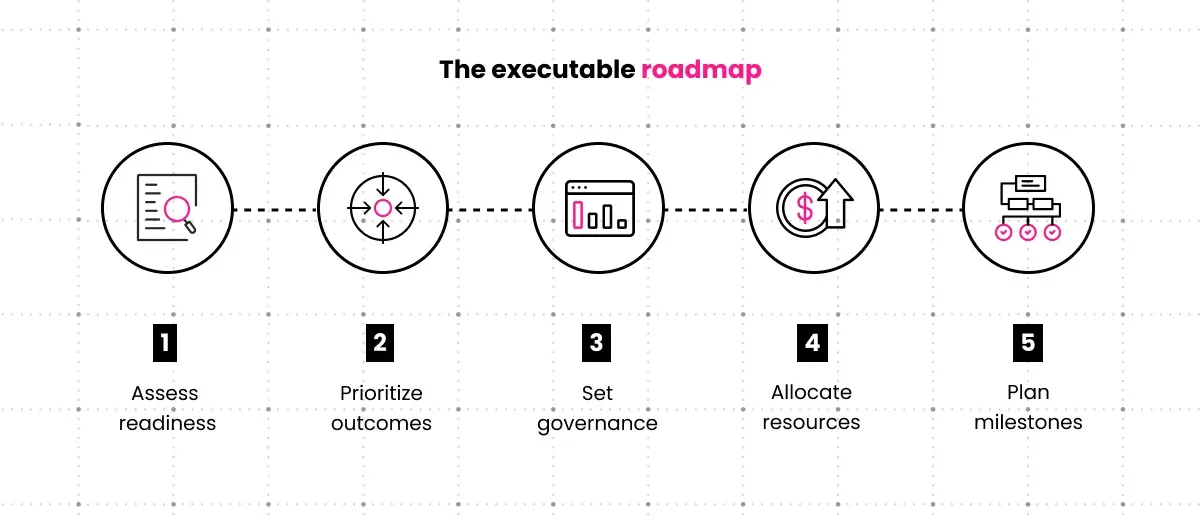
Five components distinguish executable roadmaps from theoretical ones:
- Assess current state and readiness. Before prioritizing investments, understand the gap between current capabilities and where the business needs to be. Technical debt inventories, architecture assessments, and honest team capability reviews are unglamorous. They are also essential.
- Prioritize based on business outcomes. Every initiative should trace directly to a measurable business outcome: cost reduction, revenue acceleration, risk mitigation, or customer experience improvement. Investments that cannot clear that bar deserve scrutiny before they get budget.
- Establish metrics and governance. Define what success looks like before the project starts. KPIs agreed upon at the outset create accountability and give you the data to course-correct before small problems compound.
- Resource allocation and budgeting. Transformation budgets erode when competing priorities emerge mid-year. Building in contingency and defining in advance what can be deprioritized without derailing core objectives protects execution capacity.
- Timeline and milestone planning. Meaningful organizational results typically take 12 to 18 months to materialize. Quarterly milestones with defined decision points maintain momentum and create structured opportunities to adjust.
Partnering for Transformation Success
Not every capability a transformation requires exists inside the organization. That is not a failure of planning. It is a reflection of how specialized the technology landscape has become and how fast it is moving.
External partnerships add the most value when the required expertise is needed for a defined period rather than indefinitely, when the organization needs to move faster than internal hiring timelines allow, or when an objective external perspective on architecture or strategy would meaningfully reduce risk.
What distinguishes a productive transformation partnership from a vendor relationship is alignment. The right partner comes in understanding your business context alongside the technology. They build organizational capability throughout the engagement so that knowledge stays when the engagement ends.
Clear Digital has worked alongside B2B technology companies through multiple platform generations and technology cycles. With over 90% client retention, those partnerships tend to outlast individual engagements because transformation is rarely a one-time project. That continuity matters. Transformation takes longer than any single engagement, and partners who understand the history of a system or an organization consistently deliver better outcomes.
Conclusion: From Playbook to Performance
A playbook only delivers value when it gets executed. The CIOs who outperform in 2026 will not be the ones with the most ambitious transformation vision. They will be the ones who made clear, defensible decisions early in the year and held their organizations accountable for executing against them.
The priorities are identifiable. The frameworks exist. What separates performance from intention is the discipline to commit, measure, and adjust.
If you are working through how these priorities map to your specific technology environment and business objectives, the Clear Digital team is ready to help.
Get our latest insights in your inbox
8 Criteria for Choosing a B2B Web Redesign Agency
Article
8 Criteria for Choosing a B2B Web Redesign Agency
By Clear Digital on September 15, 2026
Read moreWhat a B2B Website Redesign Requires From Your Team
Article
What a B2B Website Redesign Requires From Your Team
By Clear Digital on September 11, 2026
Read moreHow to Justify a Website Redesign to Your CEO, CFO, or Board
Article
How to Justify a Website Redesign to Your CEO, CFO, or Board
By Clear Digital on September 11, 2026
Read more