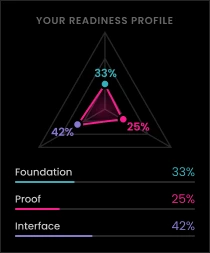

Most B2B website redesigns take longer than they should. The agency gets blamed. The timeline gets blamed. The scope gets blamed.
The actual problem is usually found before the first agency call: an internal team that wasn’t ready.
This isn’t a knock on marketing or IT. Redesigns are genuinely complex, cross-functional projects, and most organizations run them without a real project owner, without an agreed-upon scope, and without any clarity on who has final say. By the time an agency arrives, the gaps surface fast. Discovery takes twice as long. Rounds of revision multiply. Decisions that should take a day take three weeks.
Getting your team in order before you engage an agency is the single highest-return investment you can make in the redesign timeline. This guide walks through what that preparation looks like in practice, for VPs of Digital, Marketing Directors, and Project Managers running B2B redesigns at mid-market to enterprise companies.
Why most redesigns stall before the agency ever starts
Redesign delays tend to get attributed to agency issues: late deliverables, missed timelines, scope creep from the vendor side. Many of those problems are real. But the ones that compound are usually internal.
The most common pattern: a redesign gets approved, a kickoff date gets set, and the internal team shows up to discovery without having made the decisions that discovery depends on. Goals are still being debated. Content ownership is unclear. Legal hasn’t been looped in. Sales wants input but nobody told them it was happening.
This isn’t disorganization. It’s the predictable result of treating a redesign as a creative project rather than an organizational one. A website redesign is a governance project with a creative output. The org chart, the approval chain, the content ownership model, and the decision rights all need to be established before external work begins.
For complex B2B organizations with multiple audience segments, product lines, or regulatory requirements, this preparation isn’t optional. It’s structural. Clear Digital’s redesign of the Surescripts website required aligning content architecture across EHR vendors, pharmacists, health systems, and payers, and that complexity required clear internal ownership before the agency could proceed. The project produced +81% page views and a +37% increase in average session duration. The team came in aligned. The project moved accordingly.
Who needs to be involved in a website redesign project?
The instinct is to keep the redesign team small. Marketing leads it, IT supports it, leadership approves it. That’s a reasonable starting point and it leaves out the people who will slow the project down if they’re not involved early.
The roles most teams miss are the ones that appear at the worst possible moment: legal reviewing compliance language two days before launch, Sales pointing out that the messaging doesn’t match what they tell prospects, InfoSec blocking hosting or integration decisions because they weren’t consulted during discovery.
The roles that belong in your planning phase, not just your review phase:
| Role | Responsibility in a redesign | When to bring them in |
|---|---|---|
| Executive sponsor | Approves scope, budget, and major pivots | Before agency engagement |
| Marketing lead | Content strategy, messaging, campaign integration | Before agency engagement |
| IT / Engineering lead | CMS requirements, integrations, hosting, security | Before agency engagement |
| Project coordinator | Timeline management, internal communication, dependency tracking | Before agency engagement |
| InfoSec / Compliance | Data handling, accessibility, regulatory review | During requirements, not launch |
| Sales Enablement | Prospect-facing messaging alignment, conversion requirements | Discovery phase |
| Legal | Terms, disclaimers, regulated content | Discovery phase |
| Demand Gen | Lead capture, form requirements, CRM integration | Discovery phase |
| Content owner(s) | Page-level content responsibility and approval | Content audit phase |
Two roles deserve particular attention because they’re most often brought in too late.
InfoSec and Legal. In regulated industries (healthcare, financial services, SaaS with enterprise contracts), these teams have non-negotiable requirements. If they’re reviewing for the first time at QA, you’re not late in the project; you’re starting the project over.
Sales. A redesign that doesn’t involve Sales is likely to produce a website that makes marketing happy and leaves Sales confused. The website is part of the sales process. Someone from Sales needs to be at the table when conversion flows, messaging hierarchy, and proof point placement are being decided.
What should you align on before the first agency call?
An agency’s job during discovery is to understand your business, your audience, and your goals. Your job before discovery is to know what you think about each of those things, even provisionally.
Teams that show up to discovery without internal alignment on these questions spend a significant portion of the engagement working through disagreements in front of the agency. That costs time and budget and typically extends the overall project by weeks.
Four areas to resolve before kickoff:
Goals and success criteria. What does a successful redesign look like, and how will you measure it? If you can’t answer this before the agency asks, the project scope will expand to fill the ambiguity. Clear Digital’s B2B website metrics guide covers what’s worth tracking and how to set baselines before a redesign begins.
Audience prioritization. B2B websites often serve multiple audiences: buyers, users, partners, and job seekers. If you don’t decide internally who the primary audience is, the agency can’t make that call for you, and each stakeholder will assume the site is being built for their audience. Prioritize now.
Content ownership. Every page on the new site needs an owner. Not a committee. One person who is responsible for writing, reviewing, and approving that section. Establish this before the project starts.
Scope boundary. Is this a redesign, a refresh, or a full rebuild? Is it a visual update or a structural reorganization? If you’re not sure, review the website redesign vs. a refresh framework before your first agency meeting. Showing up without a clear scope position is the fastest way to extend a timeline.
If your goals overlap with why your current site is underperforming, reviewing why B2B websites underperform before the agency conversation helps you frame the brief correctly.
How to run a content and asset audit your team can actually complete
Most content audits don’t fail because the team is lazy. They fail because the scope is undefined, the ownership is unclear, and nobody set a deadline.
A content audit for a redesign has one job: tell you what you have, what you’re keeping, what needs to be rewritten, and what you’re cutting. It doesn’t need to be exhaustive. It needs to be accurate about the things that matter.
A practical approach for mid-market B2B organizations:
Start with a URL inventory. Export every URL from your current CMS or crawl the site with a tool like Screaming Frog. You need a complete list before you can make decisions about it.
Score each page against three questions. Does this page serve a current business goal? Does it reflect current messaging and positioning? Has it had any traffic in the last 90 days? A page that fails all three is a cut candidate. A page that serves a goal but has outdated content is a rewrite candidate.
Assign content owners before you score. Don’t let the marketing team make editorial decisions about product pages or service pages without input from the owners of those areas. The audit is faster and more accurate when each person owns their section.
Set a hard deadline. The content audit is typically the first place a redesign timeline slips. If you give the team two weeks, it takes four. Set a deadline, build in one review cycle, and move.
Inventory your assets separately. Brand files, photography, video, and design assets belong in a separate inventory from content pages. You’ll need this list for the agency brief.
The output of a content audit should be a spreadsheet with: URL, page title, content owner, keep/rewrite/cut decision, and notes. That’s it. The agency will work from it during information architecture. Completing this phase before kickoff is one of the most direct ways to compress the overall project timeline and reduce scope-driven overruns later.
Most redesign delays come from internal gaps, not agency gaps. We help teams get ready before kickoff so the project moves at pace.
How to manage stakeholders who won’t engage until it’s too late
Every redesign project has them: the executive who doesn’t want to be in weekly meetings but will have strong opinions about the homepage at launch. The department head who says “keep me posted” and then rewrites the about page draft at review.
You can’t eliminate this. You can contain the damage by designing the engagement model before the project starts. The four methods below form a minimum viable alignment model. For organizations with larger stakeholder groups or more political complexity, a standalone stakeholder communication plan is worth building as a separate asset.
A guardrails document. A one-page summary of what’s in scope, what’s out, who owns what, and what the approval chain is. Circulate it to all stakeholders before kickoff. Its value isn’t the document itself; it’s that it forces the conversation about decision rights before they become a conflict.
A tiered feedback structure. Clarify the difference between feedback that changes the direction of the project and feedback that changes a detail. Structural feedback (we’re rethinking the IA, we’re changing the primary audience) belongs in Phase 1. Visual and copy feedback belongs in Phase 2. Stakeholders who give structural feedback in Phase 2 should be told, clearly, that it’s out of window.
Change windows. Designate specific dates in the project timeline as decision checkpoints. Outside of those windows, changes require a formal scope conversation. This isn’t inflexible project management. It’s the only way to keep a multi-stakeholder project from extending indefinitely.
A decision log. A shared document (a Google Sheet works fine) that records every significant decision made in the project: who made it, when, and why. The decision log gives late-arriving stakeholders context so they’re not relitigating settled decisions. It also provides a paper trail when scope questions arise.
This is where a strong PM earns their cost. The guardrails document, the feedback structure, the change windows, and the decision log don’t run themselves. Someone has to own them. If you don’t have a dedicated PM, assign one person on the internal team to hold this function for the duration of the project. Getting this right protects the timeline more than any other single variable.
Greater Houston Partnership’s redesign succeeded in part because of this kind of client-side discipline. As their Sr. Director of Marketing and Communications noted: “Working with Clear has been one of the best experiences I’ve had working with any web developer in my career. They are incredibly transparent and work hard to understand business objectives.” That transparency runs in both directions. The client team was equally clear about what they needed.
When your redesign is also a rebrand: sequencing brand work before the build
If your redesign is happening at the same time as a brand repositioning, the sequence matters more than most teams realize.
A common pattern: messaging and visual identity are being developed in parallel with the web build. The brand work finishes two-thirds of the way through the project. The web team then retrofits the new brand onto a structure they built for the old one. This always costs time and usually costs quality.
Brand first, then web. TealBook followed this model: brand workshops to align messaging and visual foundation, then the web build. The result was a site where structure, content, and visual identity reinforced each other from the start, with ROI visible within 15 days of launch.
If your organization is doing both at once, build a decision gate between the two workstreams. The web project shouldn’t proceed past IA until the brand positioning is locked. This will feel like a delay. It’s the opposite.
Setting up for a strong discovery phase
A good agency discovery process is designed to surface what you know, fill in what you don’t, and pressure-test your assumptions before anything gets designed or built.
Your team gets much more out of discovery when you arrive with documented answers to the foundational questions, an aligned internal team, a clear decision-maker who can speak for the organization, and a content audit already underway.
The difference between a discovery phase that takes three weeks and one that takes six often comes down to how much internal alignment work the agency has to do on your behalf.
A few things to have ready before your first discovery session:
- A one-page brief covering your goals, primary audience, current site gaps, and known constraints
- A point of contact with actual authority, not just a project coordinator
- A list of integrations and technical dependencies your new site must support
- Any brand, messaging, or positioning work completed in the last 18 months
Signifi’s redesign launched within 3 to 4 months, a fast timeline for a project that included brand strategy, messaging workshops, and full web execution. The speed came from internal preparation. The agency had what it needed to work.
For a detailed look at what a well-run discovery process looks like from the agency side, see Clear Digital’s guide to the B2B website discovery process. If you’re also evaluating whether to build internally or bring in outside support, when your in-house team needs external web support covers that decision in detail.
FAQ: Common questions about internal team preparation for a website redesign
How do you prepare your team for a website redesign?
Start with governance before you start with content. Establish who owns decisions, who needs to be consulted, and who has final sign-off. Assign a project coordinator with actual authority. Run a content audit and assign page-level owners before the agency engagement begins. The teams that move fastest are the ones that arrive at discovery with documented answers, not open questions.
Who should be involved in a website redesign project?
At minimum: Marketing, IT, an executive sponsor, and a project coordinator. Bring in InfoSec, Legal, Sales Enablement, and Demand Gen during discovery, before any structural decisions are finalized. The roles most teams add too late are Legal (compliance review) and Sales (conversion requirements and messaging alignment).
What does an internal website redesign team need before kickoff?
Agreed-upon goals and success metrics, a clear decision-maker with budget authority, a content audit in progress, a documented scope boundary (redesign vs. refresh vs. rebuild), and an initial list of technical requirements and integrations. If your redesign includes a rebrand, brand positioning should be locked before the web build begins.
How do you align stakeholders for a website redesign?
Build a guardrails document before the project starts. Define the feedback structure (structural vs. detail feedback), set change windows, and keep a decision log. Stakeholders who aren’t in the core team should have a defined role and a defined moment to provide input, not an open invitation to review at any stage.
What is the role of a project manager in a website redesign?
A PM owns the timeline, tracks dependencies, manages internal communication, and holds the decision log. On the internal side, they run the feedback structure and enforce change windows. On the agency side, they’re the primary point of contact for status, scope questions, and deliverable review. For complex B2B redesigns, this is a full-time function for the project duration.
How long does internal preparation for a website redesign take?
For a mid-market B2B organization, plan for four to six weeks of internal preparation before an agency engagement begins. That includes assembling the team, running the content audit, completing a scope brief, and locking any brand work that will inform the web build. Compressing this phase typically extends the overall project timeline by more.
What should be completed before a website redesign discovery starts?
A completed content audit, a scope brief, an internal team roster with defined roles, a list of technical requirements, and a clear decision-maker identified. The agency should arrive at discovery to learn about your business, not to surface basic alignment questions your team hasn’t resolved.
If your team is getting ready to start a redesign and you want to pressure-test your preparation before the first agency call, we are easy to reach. Talk to Clear Digital about your project →
Get our latest insights in your inbox

The Clear Digital Method: Our 6 Phase B2B Website Process, Explained
By Steve Ohanians on September 3, 2026
Read more
When a “Good Enough” Website Is Quietly Costing You Pipeline
By Clear Digital on July 14, 2026
Read more
How to Evaluate a B2B Web Design Agency (Before You Sign Anything)
By Steve Ohanians on May 26, 2026
Read more