
Plenty of B2B redesigns go sideways before anyone opens a design file. A B2B website discovery process is the first phase of a website redesign: your team and your agency agree on goals, scope, content, and technology before design starts. You work through it in a series of workshops and working sessions, and you finish with a project roadmap both teams built together. If you’re still deciding whether to redesign at all, start by assessing your website redesign readiness.
Clear Digital has 25+ years of B2B expertise, and a lot of it shows up in how we run discovery. A creative brief and a kickoff call put your requirements on paper. We put the people who will build your site in a room with the people who will own it, then split into focused sessions on creative, content, and technology. We use each session to settle decisions and name owners, so the build starts with fewer open questions.
Discovery takes time up front. It saves time and resources later in the project, because ownership is clear from the outset.
Why start a B2B website redesign with discovery?
Start with discovery so you and your agency build trust before any budget goes into design. By the end, you should feel confident the agency understands your goals and has the experience to deliver on them.
Discovery is also where both teams set up how they will work together. At Clear Digital, we use it to agree on communication needs, collaboration tools, and who approves what, so your team and ours can keep approvals and working sessions on schedule once the project starts.
The phases of a B2B website discovery process
A B2B website redesign is a large project, and the people who own it feel that pressure. We hold several workshops before production starts so our team understands the full scope of the project and can identify risks early enough to plan around them. / Clear Digital’s discovery runs in two phases, starting with our Velocity Workshop™. We close each project with a retrospective that checks the work against the goals set in discovery. Each session has a set agenda, so everyone knows what the group will discuss, how it fits the larger project, and who on each side owns the answers.
| Phase | Purpose | Who attends | What to bring | What you leave with |
|---|---|---|---|---|
| 1. Velocity Workshop™ | A live-action brief that closes the gap between estimation and execution | Your side: CMO, VP or director of marketing, and other relevant stakeholders. Our side: project manager, lead UX, lead developers, lead designer, and the content team | Your goals and success criteria, audience priorities, content owners, and a clear position on scope | A project roadmap from start to completion, plus the hours and estimates both teams adjust or confirm to validate the budget |
| 2. Creative, content and technology working sessions | Align on the creative approach, content needs, and the technology for the build | The owners of each area on both sides: our designers, copywriters, and developers; your creative directors, subject matter experts, strategists, and marketers, plus IT for technology | Brand guidelines, a list of content to keep or migrate, and details on your current CMS and hosting | A content plan (update, keep, create), a migration approach, content delivery templates and schedule, technology requirements, and design approval paths |
| After launch: Retrospective (at project close) | Measure the finished work against the goals set in discovery | Both teams | Prework notes from each side, plus site metrics and analytics | Documented lessons both teams carry into the next phase of work |
Phase 1: The Velocity Workshop™
We start every project with a Velocity Workshop to cover everything from estimation to execution. It works like a live-action brief. With every stakeholder in the room, each person has a voice, and the group surfaces questions and concerns early, including pain points the client may not have spotted yet. Every project carries different risks, so we tackle them head on.
We developed the Velocity Workshop over years of work with B2B clients. Getting every player from both sides into one room takes effort to schedule. In that room, both teams agree on goals, requirements, and realities before anyone draws a wireframe.
Once both teams agree on what we know and what we don’t, we build the roadmap together and confirm hours and estimates in the open. You see the budget implications before the project starts. For the facilitation side of these sessions, see our discovery workshop best practices for agencies.
Phase 2: Creative, content and technology working sessions
Next, we hold separate working sessions on the creative approach, content needs, and the technology for the build. We run each session with the people who own that part of the work: designers, copywriters, and developers from our side, and creative directors, subject matter experts, strategists, and marketers from yours. We dig into your goals for the site’s design, content, and functionality so planning can start.
Our content workshop covers what content needs updating, what stays, and what you need to create, along with migration, delivery templates, and the review and approval workflow. The technology session covers whether your current CMS still fits, your hosting requirements, and who owns DNS and domain changes, so bring IT into it.
Your team and ours also need answers to a handful of strategic questions during discovery, from business context to design strategy. We break those down in four key discovery questions for your B2B website redesign. If your market position is part of the brief, plan time for a competitive analysis of your market.
After launch: the retrospective
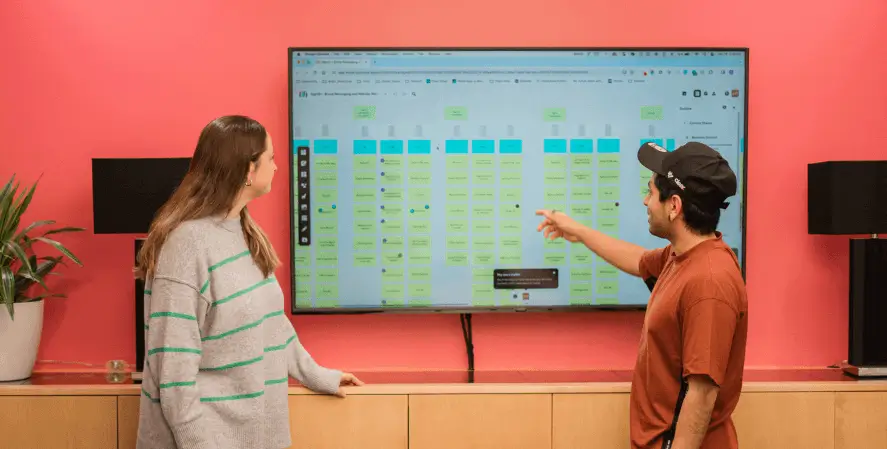
To tie everything together, we end with a retrospective working session at the close of the project. We use metrics and analytics to gauge results, and we return to the goals from those first discovery conversations to confirm the work delivered on them.
Both teams do some prework, then talk through what worked, what didn’t, and what the team learned. We cover the format in our post on how we run project retrospectives.
What do you get out of a B2B website discovery process?
You leave discovery with a shared roadmap, confirmed estimates, and a plan for content, technology, and approvals. Discovery length depends on project scope, so ask your agency to put the discovery schedule in writing before you sign.
Outputs to expect from a Clear Digital discovery:
- A project roadmap from start to completion, built with both teams in the room
- Documented findings your team and ours can build from
- Hours and estimates both teams adjust or confirm to validate the budget
- A content plan: what to update, keep, and create, how migration will work, and the delivery templates and schedule your team will follow
- Technology requirements, including CMS fit, hosting, and DNS and domain ownership
- Named owners and approval paths, including who approves design directions and how your team collects feedback
For the full timeline from first workshop to launch, see how long a website redesign takes from planning to launch.
How to evaluate an agency’s discovery process before you sign
Finding the right agency for a large website project is hard, and a rough experience with a past agency can make the next search harder. The discovery scope in each proposal is one of the best places to test fit. Check for these four things:
- Named sessions. The proposal names each workshop and working session and what it covers.
- Named attendees on both sides. You know who attends from your team and theirs, including the delivery team that will build the site. Ask whether that delivery team takes part before you and the agency lock scope.
- Documented outputs. The agency tells you what you get back in writing, such as a roadmap, confirmed estimates, a content plan, and technology requirements.
- A seat for IT, Sales, and content owners. The plan brings these people in during discovery, which makes aligning multiple stakeholders on a website project far easier.
If a proposal describes discovery without naming the sessions, who participates, or what you get back, you and the agency have no shared definition of what discovery will accomplish. Our guide to evaluating a B2B web design agency covers the rest of the selection process, and our guide to preparing your internal team for a website redesign covers your side of discovery.
Give discovery its time before design starts
Once you’re ready to start a B2B website redesign, skipping some of the up-front legwork is tempting. Everyone wants to get to the new designs and UX. The more time you invest in discovery, the more your redesign pays off in the long run.
Our goal is to become an extension of your marketing team. Time in discovery helps us understand your goals, metrics, and bandwidth, so we can build a realistic roadmap to the outcomes you want. A redesign can also be the start of a long partnership with an agency that gets your brand and your marketing objectives.
Planning a B2B website redesign? Let’s talk about your discovery process.
Get our latest insights in your inbox

How Enterprise Websites Win the Room: The 5-Part Room-Readiness Framework
By Clear Digital on October 29, 2026
Read more
8 Criteria for Choosing a B2B Web Redesign Agency
By Clear Digital on September 15, 2026
Read more
What a B2B Website Redesign Requires From Your Team
By Clear Digital on September 11, 2026
Read more