There is a structure we typically follow to make sure we cover each key element, that communication remains open throughout, and that nothing is overlooked.

A quarterly business review (QBR) is a structured meeting held every three months between an agency and its clients to review progress, share results, address challenges, and plan the next quarter. Done well, it is one of the most reliable ways to keep long-term partnerships aligned and productive. This guide covers Clear Digital’s QBR agenda structure, who should be in the room, and what to do after the meeting to keep momentum going.
You’ve heard it before: You and your most valued partner company have been chugging along knocking down important work together, you hit a bump in the road, and someone says it: “It would have been nice if we had known that sooner.”
Part of this is just normal day-to-day communication breakdown with teams. It happens. Part of it is avoidable and, to help make sure we minimize it as much as we can, we’ve developed a partnership milestone we call our Quarterly Business Review (QBR).
The QBR has become a key ceremony in building and maintaining our most important and lasting client partnerships. It is a consistent opportunity for us not only to conduct a business review and discuss our recent projects, performance, and milestones, but it also empowers collaboration on the strategy, plans and goals for our work in the upcoming and subsequent quarters.
It gives all key members of the agency-client partnership team an opportunity to showcase their combined accomplishments and business improvements, and provides a structure where opportunities and takeaways are reviewed and discussed before work continues.
Who Should Attend a Quarterly Business Review?
The most effective QBR includes senior leadership from both sides. From the client-side, this is usually the Chief Marketing Officer, Chief Digital Officer or Senior Vice President of Marketing.
A senior executive brings the all-important strategic view to the conversation, helps make sure the team goals remain in line with the company’s direction and can help quickly build momentum behind — and enthusiasm for — new initiatives. In return, client senior leaders get a polished strategic summary of the work the customer success team has completed, at a level of detail that’s often difficult to assemble, as well as the opportunity to ask questions and provide real-time feedback.

How Do You Prepare for a QBR?
The setup for a successful QBR begins with — and is interwoven with — effective project and client support/maintenance planning across the entire partnership team. An effective team is aligned on how success is measured — including key performance indicators — and closely monitors progress as new opportunities are identified and rolled out.
Throughout the quarter, the partnership team is in regular communication about status and progress. A key element of this is making sure that everyone is aligned, and that goals are consistent with a detailed definition of customer success.
What Should a QBR Agenda Include?
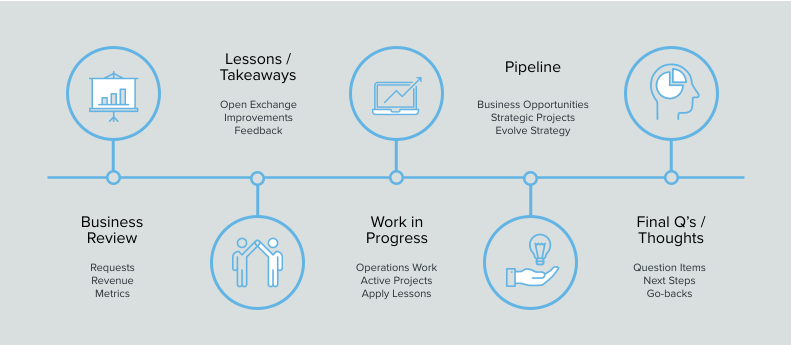
While each QBR meeting and presentation is unique and variable depending on the customer, company, industry, stakeholders, and specific projects, there is a structure we typically follow to make sure we cover each key element, that communication remains open throughout, and that nothing is overlooked.
The sessions themselves, depending on the discussion, typically range from two to four hours in duration.
1. The Business Review: We start with a thorough review of project progress over the past quarter, including detailed results, metrics highlights and revenue information, as applicable. Work requests are discussed, and key project and operational highlights are reviewed, while a partnership summary dashboard gives all attending the opportunity to quickly understand the volume and type of work completed.
The business review section concludes once questions are answered and discussion of quarterly accomplishments is complete.
2. Lessons Learned / Key Takeaways: While retrospectives are a part of the closure of every project, it’s important for the whole partnership team to look back and review what’s been learned and develop the key takeaways together. This is the focus of the second element of our QBR.
Both our agency team and the client team typically come to the table with ideas, and open exchange and feedback are encouraged. In this part of the meeting, the full team reviews and discusses what it did well, what it could improve upon, and any challenges that may interfere with taking the partnership to the next level.
Usually, a consensus around immediate next steps can be reached and is documented. In the case of more complex issues, additional meetings are scheduled to continue the discussion and identify how best to move forward.
3. Work in Progress: The third part of the QBR is a summary of active project and operations work, which gives the entire team the opportunity to better understand what’s happening. It also affords the team the opportunity to consider how it might apply the lessons learned and takeaways just developed to in-progress work.
4. The Pipeline: Next, in the fourth part of our QBR, work-in-progress discussions transition to a discussion of what’s on the horizon. The team reviews and discusses known strategic projects in the pipeline as well as potential business opportunities in the near, middle and long term. These discussions can not only lead to adjustments to active projects but are also important in helping the customer success team start thinking and getting excited about the evolving strategy.
5. Questions and Next Steps: In the last segment of the meeting, the team shares any final thoughts, discusses any remaining questions and go-backs, and reviews action items and next steps.
What Happens After a QBR Meeting?
Even the best QBR preparation and meeting won’t be successful if the customer success team never follows up on what it has discussed and decided, so we’ve learned it’s incredibly important to follow through promptly with a plan to build on the momentum created in the meeting.
We make sure that notes and action items are promptly distributed to all involved, that follow-up meetings are scheduled and held, and that the teams are reminded of discussions, commitments, lessons learned and takeaways between quarters.
The QBR has become a key ceremony in building and maintaining our most important and lasting client partnerships.
How QBRs Build Stronger Agency-Client Partnerships
In the years we’ve been doing them, we’ve learned that our QBRs are a foundational element to our longest-lasting and most successful partnerships with our clients. It has helped us build an important cadence to our customer success process, where we match business reviews and metrics with roadmap and strategy. We make sure we have an open dialogue about what’s working well and what challenges the team may face.
The QBR represents an opportunity for the whole team to communicate, celebrate, plan and improve in a consistent structure that we’ve found helps build both morale and effectiveness over the long term.
Frequently asked questions
What is a quarterly business review (QBR)?
A quarterly business review is a structured meeting between an agency or vendor and its client, held every three months. It typically covers project results, lessons learned, active work, and plans for the upcoming quarter. The goal is to create a consistent rhythm of accountability, transparency, and forward planning between both teams.
What should a QBR agenda include?
A solid QBR agenda covers five areas: a business review of the past quarter (results, metrics, key work completed), lessons learned and takeaways, a summary of work currently in progress, a pipeline discussion for upcoming projects, and a final segment for open questions and next steps. Clear Digital follows this five-part structure across all client QBRs.
How long should a QBR be?
Most QBRs run two to four hours depending on the volume of work, the complexity of active projects, and how much discussion the lessons learned section generates. Shorter meetings are possible for newer partnerships with fewer projects in play.
What is the difference between a QBR and a regular status meeting?
A status meeting covers current project activity and near-term tasks. A QBR is broader: it reviews the full quarter, evaluates what worked and what did not, and sets strategic direction for the next 90 days. QBRs also typically involve senior leadership from both sides, which status meetings usually do not.
How do you follow up after a QBR?
Effective follow-through starts immediately after the meeting. Distribute notes and action items to all attendees within 24 to 48 hours, schedule any follow-up meetings that came out of the discussion, and revisit commitments and takeaways at the next regular check-in so nothing slips between quarters.
Get our latest insights in your inbox
8 Criteria for Choosing a B2B Web Redesign Agency
Article
8 Criteria for Choosing a B2B Web Redesign Agency
By Clear Digital on September 15, 2026
Read moreWhat a B2B Website Redesign Requires From Your Team
Article
What a B2B Website Redesign Requires From Your Team
By Clear Digital on September 11, 2026
Read moreHow to Justify a Website Redesign to Your CEO, CFO, or Board
Article
How to Justify a Website Redesign to Your CEO, CFO, or Board
By Clear Digital on September 11, 2026
Read more