
Your website is no longer the teacher. It’s the final exam.
Most redesign briefs were written for a world that no longer exists. They assume your corporate website is the starting point of the buyer journey: a digital brochure built to explain and rank. But today’s buyers arrive pre-educated, pre-framed, and impatient. Forrester now reports that 94% of business buyers use AI in their buying process, and that in its Buyers’ Journey Survey, 2025, generative AI and conversational search were named a more meaningful source of information than any other source, far outpacing vendor websites, product experts, and sales. That means your website’s job is no longer to educate the uninformed. It is to validate, differentiate, and convert the already informed.
The Ground Has Shifted Beneath Your Website
Gartner predicts that traditional search engine volume will drop by 25% by 2026 as AI chatbots increasingly handle discovery in place of legacy search. This isn’t just a shift in traffic sources; it’s a fundamental change in user intent. Early industry analysis also indicates that AI‑referred visitors often convert at meaningfully higher rates than traditional organic search, depending on source and audience. Your site is no longer where the conversation begins; it’s where credibility is confirmed.

From Search to Synthesis: The New Buyer Journey
The buyer journey has evolved from a linear path of keyword searches to a dynamic process of AI‑driven synthesis:
- A buyer defines a problem in natural language to an AI assistant.
- AI tools compile a shortlist of potential solutions, vendors, and frameworks.
- The buyer, now armed with foundational understanding, arrives on your site expecting proof, not definitions.
By the time they reach your site, a significant portion of their research is already complete. They don’t need you to explain the “what”; they need you to prove the “how” and “why.”
Your Website’s New Job Description
Old Job: “Capture traffic, explain the category, route to sales.”
New Job: “Confirm what buyers heard from AI, deliver contextual proof, build trust and then route to sales.”
This means your content strategy must now optimize for authority, not just search rankings. Research from firms like SpotlightAR and Profound indicates that large language models surface and rely more heavily on analyst sites, review aggregators, and community forums than on vendor blogs. Winning in this new landscape means becoming citable by AI, not merely clickable by humans. For the buyer-side framing of this shift, What B2B Buyers Now Expect From an AI-Era Agency Partner covers what that looks like in practice.
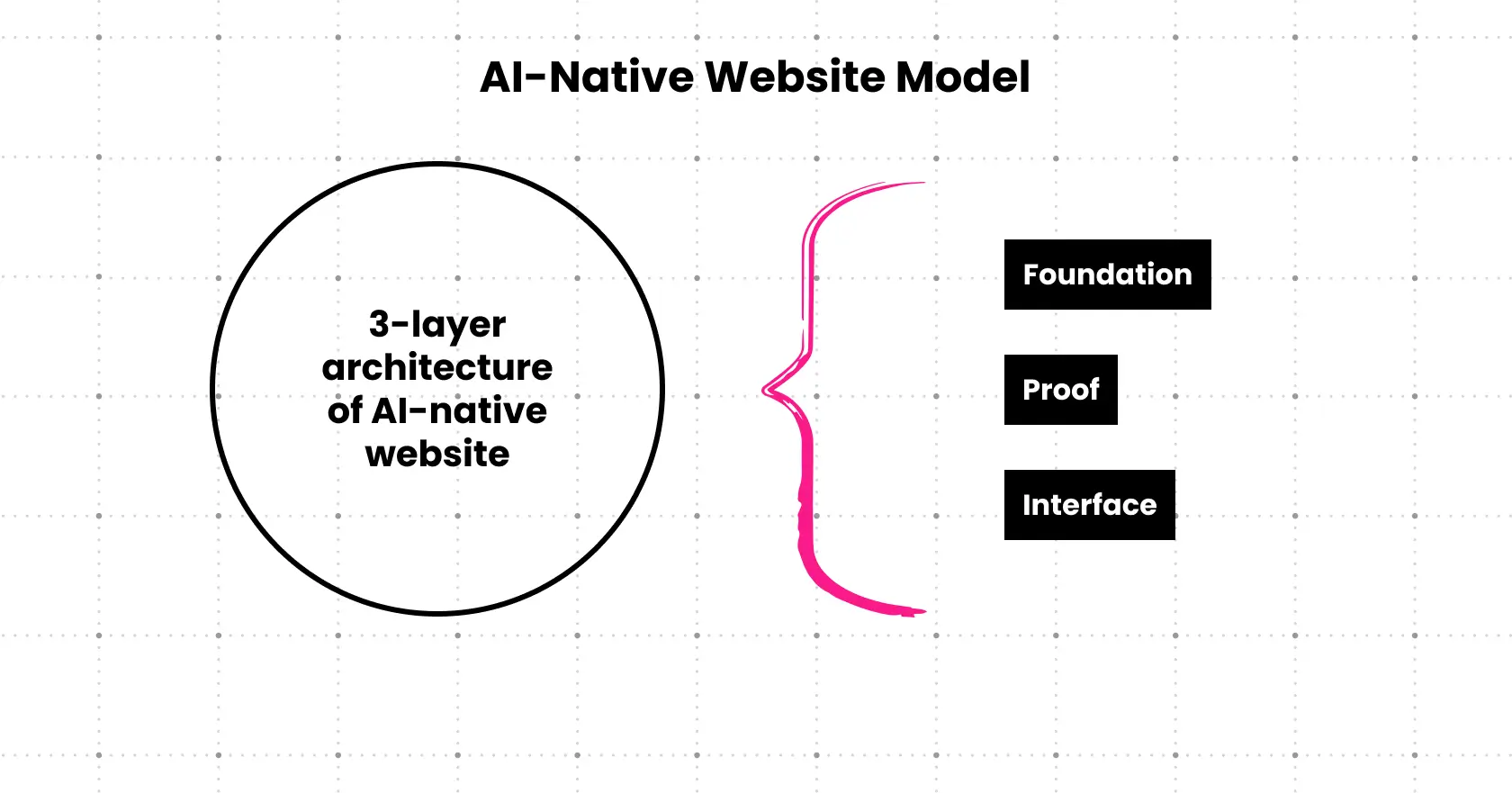
The Three‑Layer Model of the AI‑Native Website
To meet the demands of the AI‑informed buyer, websites must be re‑architected around three distinct but interconnected layers.
1. The Foundation Layer
This is your brand’s official curriculum for LLMs and humans alike. It’s the source of truth.
- Structure: One canonical, comprehensive page per product, feature, or core concept.
- Content: Clear definitions, verifiable data points, and structured schema markup to make the information machine‑readable.
- Technology: Use of a headless CMS to deliver modular, reusable content across channels. This layer’s job is to “train” AI and human visitors to describe your business accurately and consistently.
2. The Proof Layer
If the Foundation Layer tells AI what you do, the Proof Layer shows it in action. This is where you provide tangible proof.
Examples of high‑impact “proof experiences”:
- Interactive demos
- ROI calculators
- Scenario simulations
- Developer sandboxes
In an AI-era site, what users can do is just as important as what they can read; because it turns explanation into proof.
3. The Interface Layer
The chatbot has graduated from a corner widget to a primary navigation channel. It’s your site’s built‑in concierge.
Function: A branded AI assistant can qualify leads, route users to complex information, and personalize guidance in real time.
Impact: Conversational experiences have been shown in multiple case studies to significantly increase the rate at which site interactions convert into opportunities.
The question isn’t “Should we have a chatbot?” It’s “How much pipeline are we losing by making users click instead of ask?”
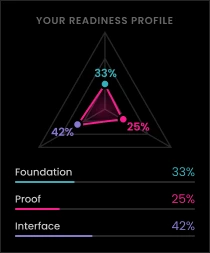
See where your site stands.
Take the free 12-question assessment and get a personalized score across all three layers.
Three UX Shifts Defining the AI‑Native Era
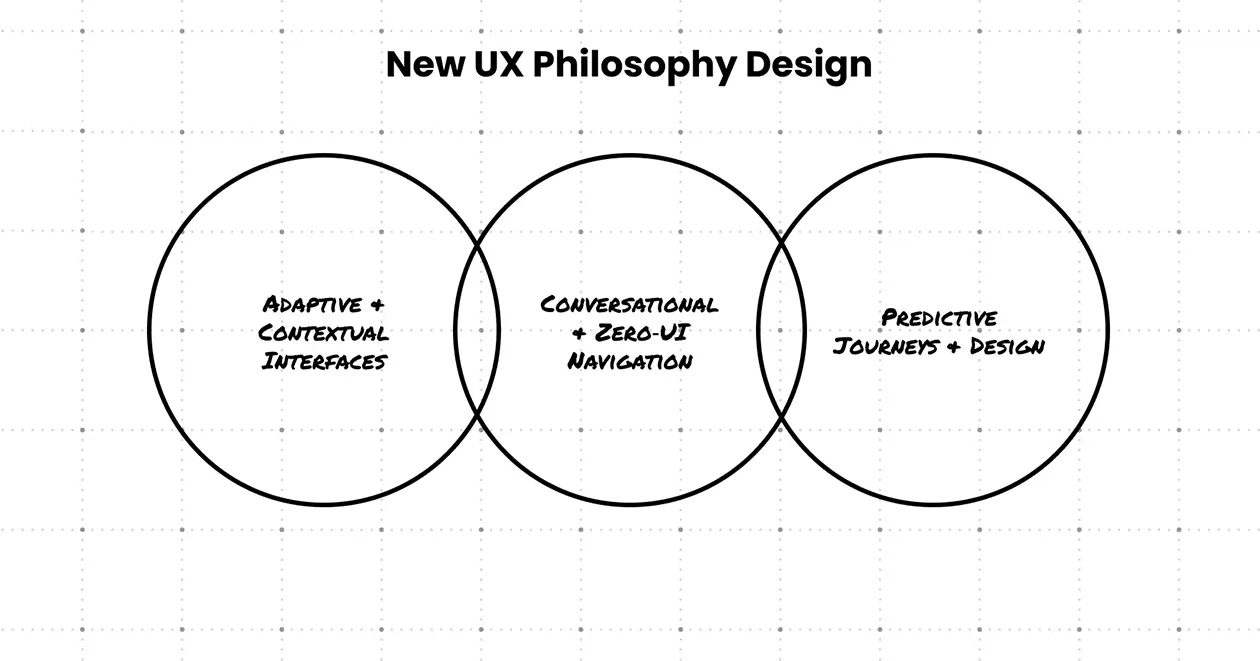
Building an AI‑native website requires more than new technology; it demands a new philosophy of user experience design.
1. Adaptive & Contextual Interfaces
One site, many realities. The experience must adapt to the user’s role and intent.
2. Conversational & Zero‑UI Navigation
Replace deep, nested menus with intent‑driven chat and search. Users should be able to ask natural‑language queries and receive instant answers.
3. Predictive Journeys & Design
A truly intelligent site anticipates the next step before a click happens. This includes technical improvements such as pre‑rendering likely next pages.
The Roadmap: How to Build Your AI‑Native Website
Transitioning to an AI‑native model is a strategic journey, not an overnight flip of a switch.
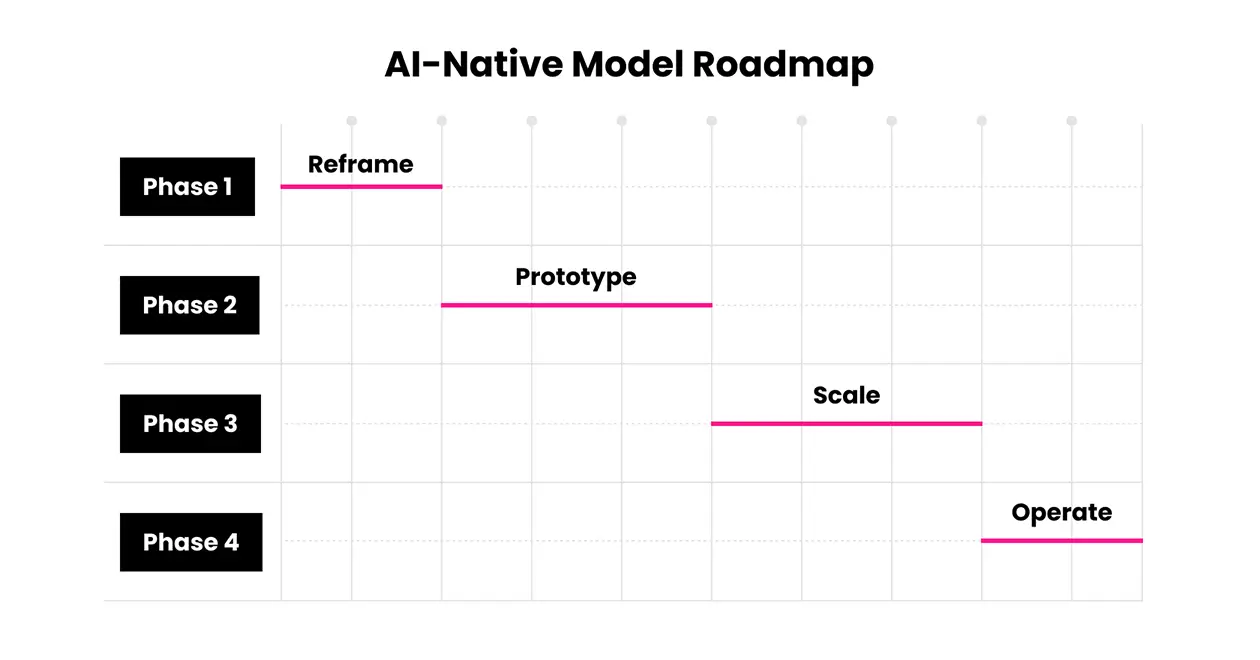
Phase 1 – Reframe (Weeks 1–6)
Audit your existing content and align executives on new KPIs like Experience Engagement Rate and AI‑Assisted Session Rate.
Phase 2 – Prototype (Months 2–6)
Launch one high‑impact experience and pilot a branded AI assistant.
Phase 3 – Scale (Months 7–12)
Add persona‑specific journeys and deploy an adaptive homepage.
Phase 4 – Operate (Ongoing)
Treat the website as a living product with continuous experimentation and measurement.
The C‑Suite Question That Matters
In an AI‑first world, your website is no longer an information repository: it’s a proof platform and a front‑line layer of your go‑to‑market engine.
“What job must our website do now that buyers arrive with their minds half‑made‑up?”
The strategy is clear. The execution is where most teams need a partner.
From Roadmap to Reality
This shift is already underway, and the window for advantage is open right now. The three-layer model and phased approach above provide a practical path forward, but the real value comes from executing with speed and coherence across strategy, content, UX, and technology.
Clear Digital is built for that end-to-end transformation. We partner with enterprise marketing and digital teams to define the vision, align stakeholders, design the right experiences, and deliver measurable outcomes, including AI-ready content and next-generation website capabilities. If you’re ready to move from AI awareness to AI-era website leadership, we can help.
Bernadette and Clear Digital CEO Steve Ohanians recorded a full conversation on this topic. If you want to hear how the framework applies in practice, watch the session here.
Get our latest insights in your inbox

8 Criteria for Choosing a B2B Web Redesign Agency
By Clear Digital on September 15, 2026
Read more
What a B2B Website Redesign Requires From Your Team
By Clear Digital on September 11, 2026
Read more
How to Justify a Website Redesign to Your CEO, CFO, or Board
By Clear Digital on September 11, 2026
Read more