These sites lead with focused messaging and smart visual hierarchy that guides the eye naturally.

ArticleWeb Design
Only 4 in 10 Fortune 500 Tech Brands Nail Their Homepage. Key Insights From Our 2025 Report
For B2B tech firms and their marketing teams, it’s time to start thinking ahead to next year.
In B2B technology marketing, your homepage does more than greet visitors. It sets the tone for how your brand is judged, trusted, and remembered. For many buyers, it is the first and only chance you get to earn their attention before they decide to move on.
The 2025 B2B Technology Homepage Effectiveness Report reviewed 40 leading Fortune 500 technology companies and uncovered a familiar story. Even some of the world’s best-known tech companies fall short on clarity, usability, and performance.
A great homepage isn’t just about polish. It shows confidence. It communicates who you are, what you stand for, and why someone should care. When it works, it turns curiosity into belief. Yet fewer than 40% of high-growth companies scored “excellent” in overall effectiveness. That means most B2B brands are still giving away their most valuable opportunity: the first impression.

Clarity Wins: How Top Performers Keep It Simple
The best-performing homepages make one thing immediately clear: they know exactly who they are and what they do. Within seconds, visitors understand the company’s purpose and value. These sites lead with focused messaging and smart visual hierarchy that guides the eye naturally.
Top brands don’t hide behind buzzwords or cleverness. They get straight to the point, much like those that excel at humanizing their B2B story through clear About Pages. Their headlines work hard, their navigation makes sense, and their design builds momentum instead of friction.
High-performing sites also invest in user experience. Interactive modules, thoughtful layouts, and accessible patterns invite exploration instead of overwhelming it. Every click feels intentional. The result is a homepage that not only informs but motivates.
The Call to Action Problem
Many B2B websites do everything right until it’s time to ask the visitor to take the next step. The report found that nearly two-thirds of brands underperform in their use of calls to action. “Learn more” still shows up everywhere, and it rarely inspires action.
The strongest brands replace vague prompts with specific, benefit-driven language—an approach explored in How to Improve Your B2B Website Effectiveness in 90 Days—telling visitors exactly what happens next and why it matters.
Trust signals are another blind spot. Client logos, case studies, certifications, and testimonials often sit too low on the page or are missing altogether. These small details build the credibility buyers need to move forward. Without them, even the best message can feel uncertain.
When CTAs and trust elements work together, they transform the experience. They take hesitation out of the equation and replace it with confidence.
The report found that nearly two-thirds of brands underperform in their use of calls to action.
Speed Is the New Trust Signal
Every second counts. The report found a clear connection between page load speed and overall effectiveness. Sites that load in under three seconds consistently outperform slower ones in engagement and conversions.
Speed is not just a technical metric. It shapes how users feel about your brand. A slow site can make even the best design feel dated or unreliable.
Optimizing for performance means creating a seamless, responsive experience that reinforces credibility. Tools like Clear Digital’s Website Effectiveness Engine™ help teams identify and fix friction points across UX, content, and technical layers so design and speed work together instead of against each other. If you’re not sure where your site stands, a quick Homepage Effectiveness Self-Audit can surface the highest-impact improvements.
Sites that load in under three seconds consistently outperform slower ones in engagement and conversions.
Why SaaS and Cloud Brands Are Winning
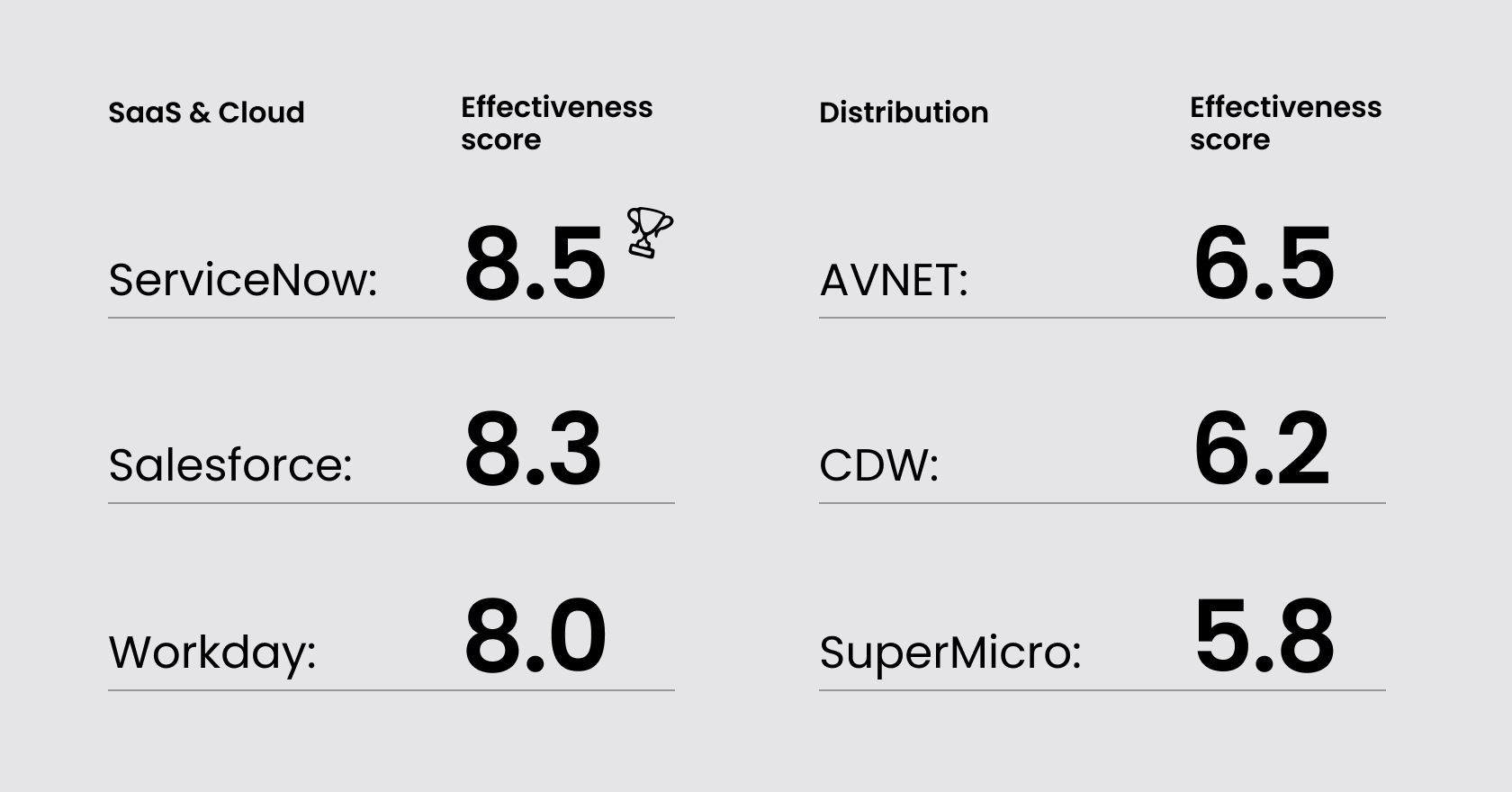
SaaS and cloud companies continue to raise the bar. Their advantage is mindset. They treat their homepages like living products, constantly testing and refining to stay aligned with audience needs. That culture of iteration keeps them sharp and consistent.
Hardware and distribution companies often struggle to keep pace. Legacy systems, layered messaging, and rigid CMS platforms make it harder to evolve. For these brands, adopting the agile mindset of SaaS marketers—constantly testing and evolving as outlined in B2B Website Design Trends—could unlock one of their biggest growth opportunities.
Your Homepage Is a Promise. Make It Count.
For CMOs, digital strategists, and marketing leaders, the message is clear: your homepage tells the story before your sales team ever gets the chance. It is where credibility begins—or ends.
Start with the fundamentals:
- Clarify your positioning: Lead with your value proposition. Tell visitors who you are, what you do, and why it matters.
- Strengthen CTAs and trust signals: Give users clear next steps and back your story with proof.
- Prioritize performance: Treat page speed as part of the brand experience, not a backend detail.
- Learn from top performers: Follow the SaaS and cloud leaders who test, learn, and adapt in real time.
- Measure what matters: Use tools such as the Website Effectiveness Engine™ or How to Improve Your B2B Website Effectiveness in 90 Days to track progress.
When you get it right, your homepage becomes much more than a landing spot. It becomes a moment of clarity—a place where your story, design, and credibility come together to inspire belief and drive action. That is what separates the good from the great in B2B digital marketing.
Get our latest insights in your inbox
8 Criteria for Choosing a B2B Web Redesign Agency
Article
8 Criteria for Choosing a B2B Web Redesign Agency
By Clear Digital on September 15, 2026
Read moreWhat a B2B Website Redesign Requires From Your Team
Article
What a B2B Website Redesign Requires From Your Team
By Clear Digital on September 11, 2026
Read moreHow to Justify a Website Redesign to Your CEO, CFO, or Board
Article
How to Justify a Website Redesign to Your CEO, CFO, or Board
By Clear Digital on September 11, 2026
Read more